
The labour movement in Bangladesh stands at a critical turning point. Advances in technology and a constantly changing labour market are reshaping the world. Meeting this change requires an organised, united and forward-looking trade union movement. The movement’s future depends on the relationship between two generations of leaders. It is equally important to build young leaders’ professional skills in a changing labo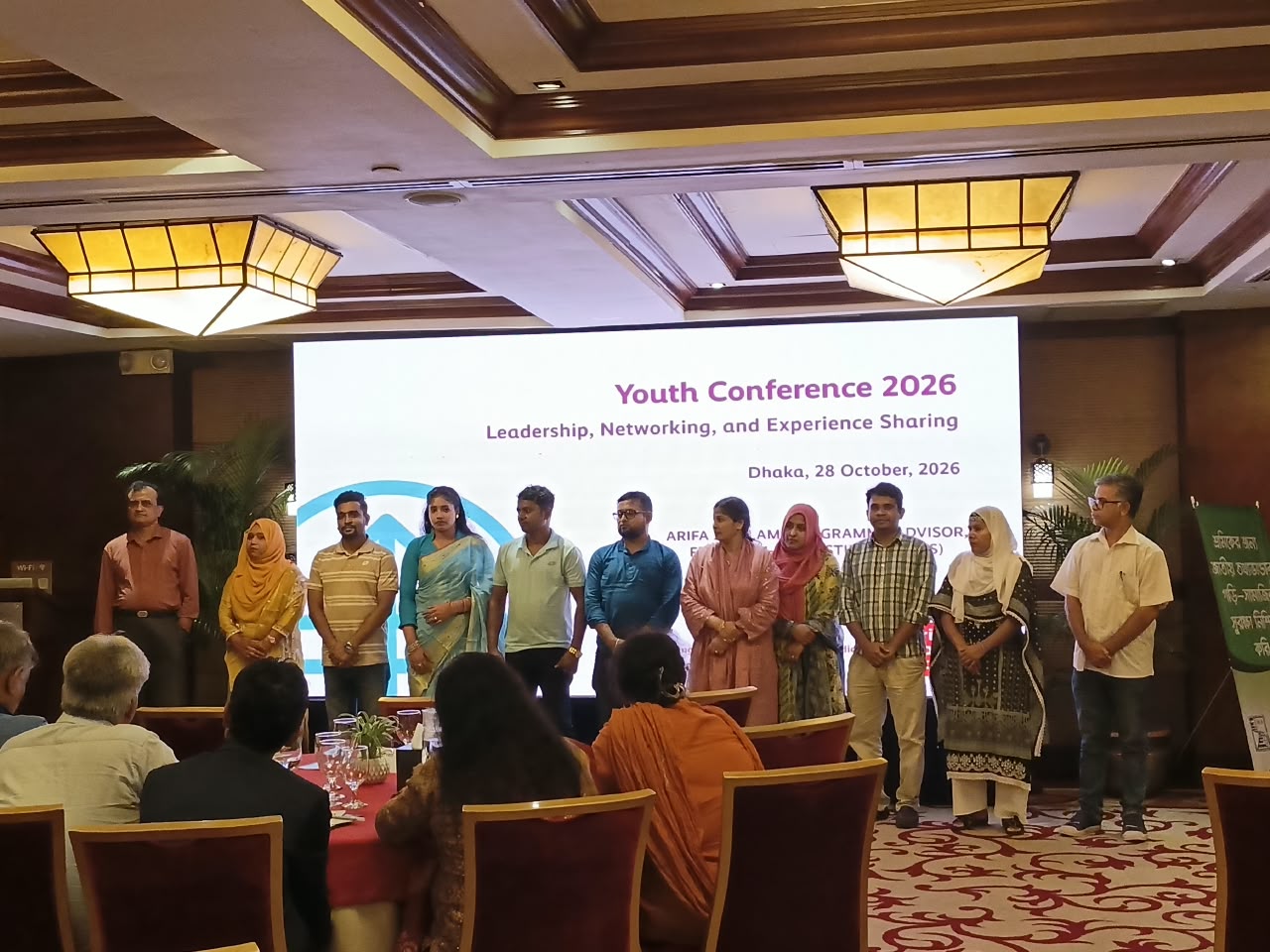 ur market and to connect them with the leadership of national trade union federations. Speakers made these remarks today, Wednesday, 28 October 2026, at the “Future Meets Experience: Conference with NTUC Leadership and Youth AoW Alumni” at the Six Seasons Hotel in the capital. Bangladesh Institute of Labour Studies-BILS and Friedrich-Ebert-Stiftung (FES) Bangladesh jointly organised the event. It was held in cooperation with the programme “Empowering Trade Unions and Young Leadership to Protect Workers’ Rights in Bangladesh.” The conference had three objectives. First, to create an opportunity for national trade union leaders and young Academy of Work (AoW) alumni to exchange knowledge, experience, leadership strategies and new ideas. Second, to build young trade union leaders’ knowledge and leadership skills on the changing labour market, workers’ rights, and the current challenges and future prospects of the trade union movement. Third, to build effective mentorship, mutual cooperation and long-term professional networks between experienced and young trade union leaders. About 100 participants joined, including AoW alumni, senior trade union leaders and academics.
Syed Sultan Uddin Ahmmed, Executive Director of BILS, spoke at the inaugural session. AoW alumnus Md. Nahidul Hasan Noyon moderated the first session, “Labour Migration: Upcoming Challenges and Strengthening Youth-Led Trade Union Action.” The panellists were Dr. Ananya Raihan, Chairperson of iSocial; Pulak Ranjan Dhar, Secretary of the Bangladesh Free Trade Union Congress; Shahidullah Badal, General Secretary of the Bangladesh Mukto Sramik Federation; and Nasrin Akter Dina, Women’s Affairs Secretary of the Executive Committee of the Bangladesh Jatiyatabadi Sramik Dal. AoW alumni Md. Zakir Hossain Molla, Md. Asaduzzaman, Roma Akter and Md. Sohel Haque shared their experiences. Nazma Yesmin, Director of BILS, and Arifa A.S. Alam, Programme Adviser at FES Bangladesh, outlined the purpose and introduced the conference. Md. Saiduzzaman Mithu, Senior Officer at BILS, presented the keynote paper. Felix Gardes, Resident Representative of Friedrich-Ebert-Stiftung Bangladesh, gave the closing remarks.
At the inaugural session, Syed Sultan Uddin Ahmmed, Executive Director of BILS, said the protection of migrant workers is one of Bangladesh’s most important yet neglected issues. The discussion aims to reach an effective solution. To achieve this, both the experience of senior leaders and the participation of young people are essential.
The keynote paper noted that 14.1 million people went abroad for work from Bangladesh between 2006 and 2025. A large p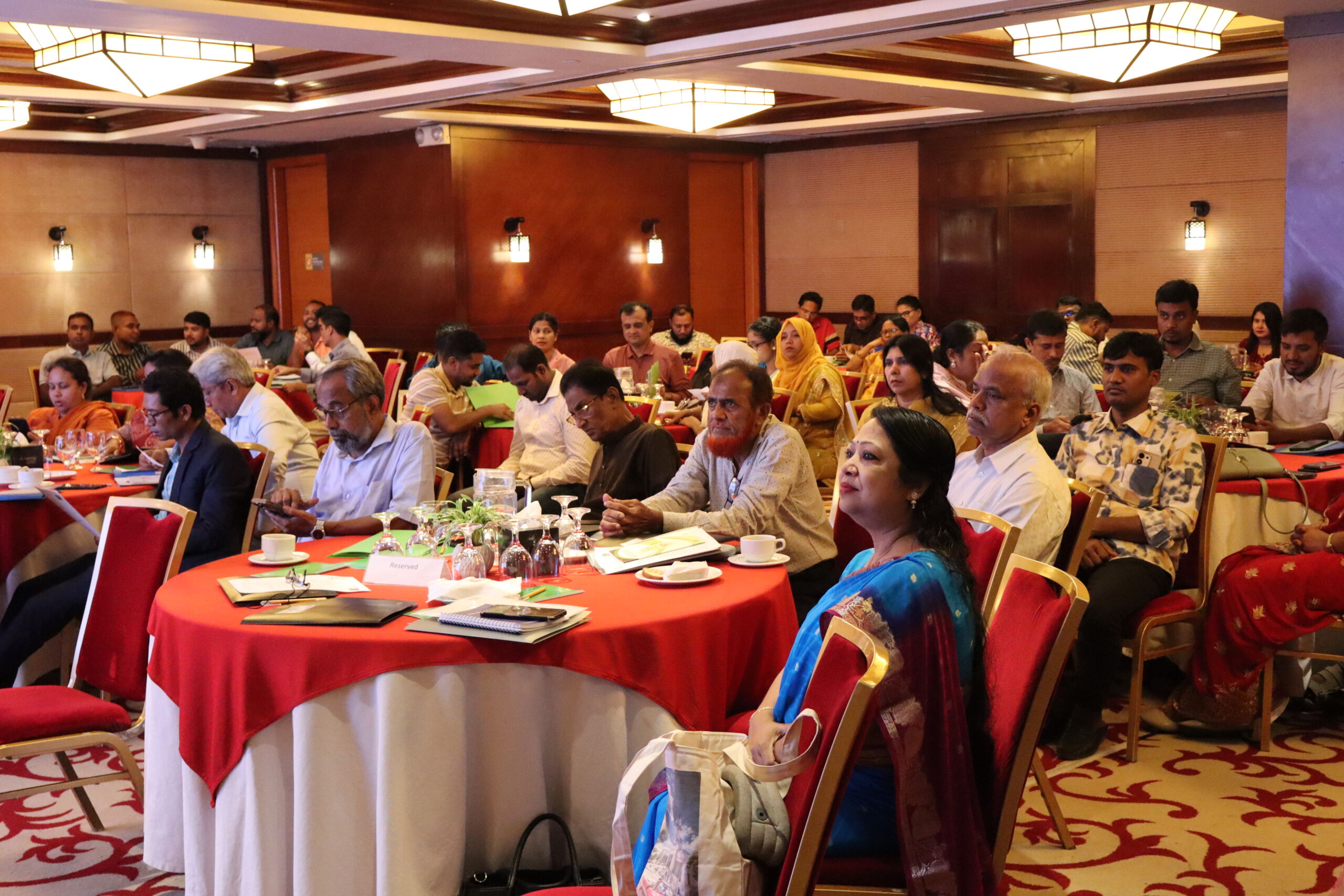 art of the economy depends on remittances, but this route carries serious risks. Low-skilled and semi-skilled workers make up 77 percent of migrant workers. As a result, they face high costs, fraud, and abuse. Migration has recently gained national attention. The Sramik Karmachari Oikya Parishad (SKOP) added migrant workers’ rights to its nine-point demands. The Labour Reform Commission has also made recommendations on the issue. Two parliamentary caucuses, one on migration and one on climate and displacement, have started work. In this situation, young trade unionists have an important role. They can set up migrant desks and support centres to help ensure safe, rights-based migration.
Dr. Ananya Raihan, Chairperson of iSocial, said a negative attitude towards migration is growing worldwide. In this situation, the fate of Bangladesh’s workers will not change without strengthening trade unions and building social pressure.
Pulak Ranjan Dhar, Secretary of the Bangladesh Free Trade Union Congress, said migrant workers are often given different work from the job they went abroad for. The main reasons are a lack of skills and migration through brokers. Workers should therefore gain skills, know their job and migrate safely on the basis of a contract. Trade unions must play a supportive role in this.
Shahidullah Badal, General Secretary of the Bangladesh Mukto Sramik Federation, said young people’s participation is essential to advance and strengthen trade unions. Trade unions should give special priority to migrant workers. It is very urgent to organise migrant workers and act to solve their problems.
Nasrin Akter Dina, Women’s Affairs Secretary of the Executive Committee of the Bangladesh Jatiyatabadi Sramik Dal, said the biggest problems in labour migration are excessive costs and unscrupulous broker syndicates. It is especially important to give more attention to women workers. Young AoW alumni can help by building a network with migrant workers.
Razekuzzaman Ratan, President of the Bangladesh Samajtantrik Sramik Front, said women workers face the greatest risk in labour migration. After returning home, most of them cannot hold their families together. Migrant workers’ experience is still stuck in fraud and abuse. Even rallies in at least ten districts on Labour Migration Day would play an effective role.
AoW alumni Md. Zakir Hossain Molla, Md. Asaduzzaman, Roma Akter and Md. Sohel Haque took part in the panel discussion. The panellists said the death rate among migrant workers is rising. The main causes are unsafe working conditions, a lack of government initiative and the inefficiency of labour wing officials abroad. Trade unions should focus on migrant workers’ rights and safety, not only on migration. They should bring their activities online to improve communication with migrant workers. Women workers often do not know what job they are going for. They travel abroad through various brokers. As a result, most of them face abuse there. Training should make women workers aware of their rights and contracts. Unions should also compile lists of these workers, give them legal aid and social protection according to the type of problem, and arrange employment for them. Some migrant workers also reported a shortage of work abroad. They are returning home unemployed. The main reason is a lack of skills. Trade unions have an essential role in solving this problem.
AoW alumna Kuasha Akter moderated the second session, “Trade Union Leadership and Future Preparedness: Youth Engagement in the Trade Union Movement.” Jasmine Juy, Research and Networking Secretary of the Garments Sramik Oikya Forum (GWUF), and Kanak Barman, Organising Secretary of the Jatiy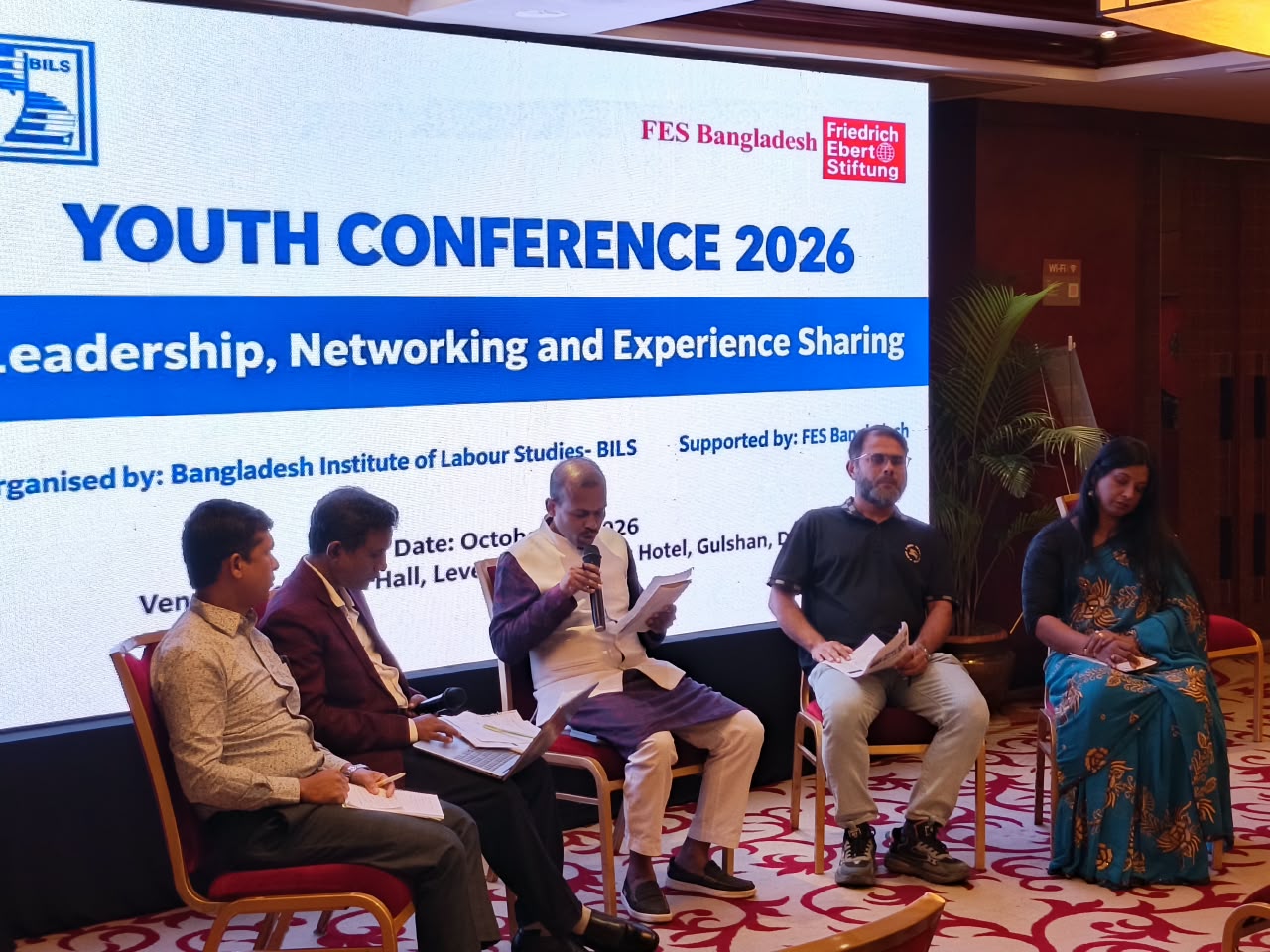 a Sramik Jote Bangladesh (JSJB), presented the keynote paper. The discussants were A.K.M. Nasim, Country Program Director of Solidarity Center Bangladesh; Naimul Ahsan Jewel, General Secretary of the Jatiya Sramik Jote Bangladesh; and Ahsan Habib Bulbul, General Secretary of the Samajtantrik Sramik Front. AoW alumni Bachchu Mia, Md. Hasibur Rahman Biplob, Jannatul Ferdous Ruby, Al Amin Khan and Md. Ripon Mia shared their experiences.
In the keynote paper of the second session, Jasmine Jui of GWUF and Kanak Barman of JSJB noted that Bangladesh has 71.7 million workers in total. About 84 percent of them work in the informal sector. Technology and automation are shrinking traditional employment. The gig economy, informal work and contract work are growing, but organising workers in these sectors has become difficult. Unions also face political influence, a lack of transparency in selecting leaders, and a growing gap between leaders and grassroots workers. The paper said that to survive, unions must bring young and women leaders to the decision-making table. It recommended quotas for young people and women in union constitutions and committees, and regular leadership training. It also stressed teaching workers new technology and digital skills, organising through digital channels, bringing gig and informal workers under the union umbrella, building a non-partisan united platform, and expanding social dialogue among employers, workers and the government. It called for guaranteed social security for informal workers, including pensions, health insurance and accident compensation.
A.K.M. Nasim, Country Program Director of Solidarity Center Bangladesh, stressed young people’s participation in trade union constitutions and policymaking. He said that, first, unions should define who counts as youth and include them in the constitution. Young people will then be more motivated to protect workers’ rights. At the same time, their participation in decision-making must be assured.
Naimul Ahsan Jewel, General Secretary of the Jatiya Sramik Jot Bangladesh, said the work of organising young people must be completed by any means, including training, federations and networking. He stressed building youth leadership, giving young people a full understanding of labour law and workers’ rights, and identifying young workers’ real problems to build a movement around them.
Ahsan Habib Bulbul, General Secretary of the Samajtantrik Sramik Front, stressed women’s leadership in union decision-making structures. He said the main barrier is the social structure. Women’s progress is possible on the basis of dignity, not charity or sympathy. Women’s leadership in trade unions will advance only when society reaches that position.
AoW alumni Bachchu Mia, Md. Hasibur Rahman Biplob, Jannatul Ferdous Ruby, Al Amin Khan and Md. Ripon Mia took part in the panel discussion. The alumni said there is no alternative to unity and networking. They urged young trade unionists to keep fighting for workers’ wages, their families, their lives and everything connected to them. They said the struggle of senior labour leaders must be combined with the thinking of young people. They also voiced concern that the gap between educated young people and the working class keeps growing, so fewer young people take part in trade unions. They raised concern about the number of women on committees as well. They asked senior leaders to give young people space while continuing to inspire them, and said this would motivate young people to take part in trade unions.
Speakers said the conference aimed to support knowledge exchange on trade union leadership, organisational development and workers’ rights. It sought to strengthen young leaders’ understanding of collective bargaining, social dialogue and advocacy, encourage dialogue and mentoring, and strengthen the AoW alumni network. Another aim was to identify shared challenges and opportunities to strengthen trade union representation and advance workers’ rights.