
The Employment Injury Scheme (EIS), now at pilot stage in the RMG industry, should be implemented in all the sectors, including the informal sector to deliver universal social protection programme for occupational hazards.
Experts made the suggestion on 29 September 2026 at a media orientation on EIS Pilot, organized by Bangladesh Institute of Labour Studies-BILS at the National Press Club in the capital.
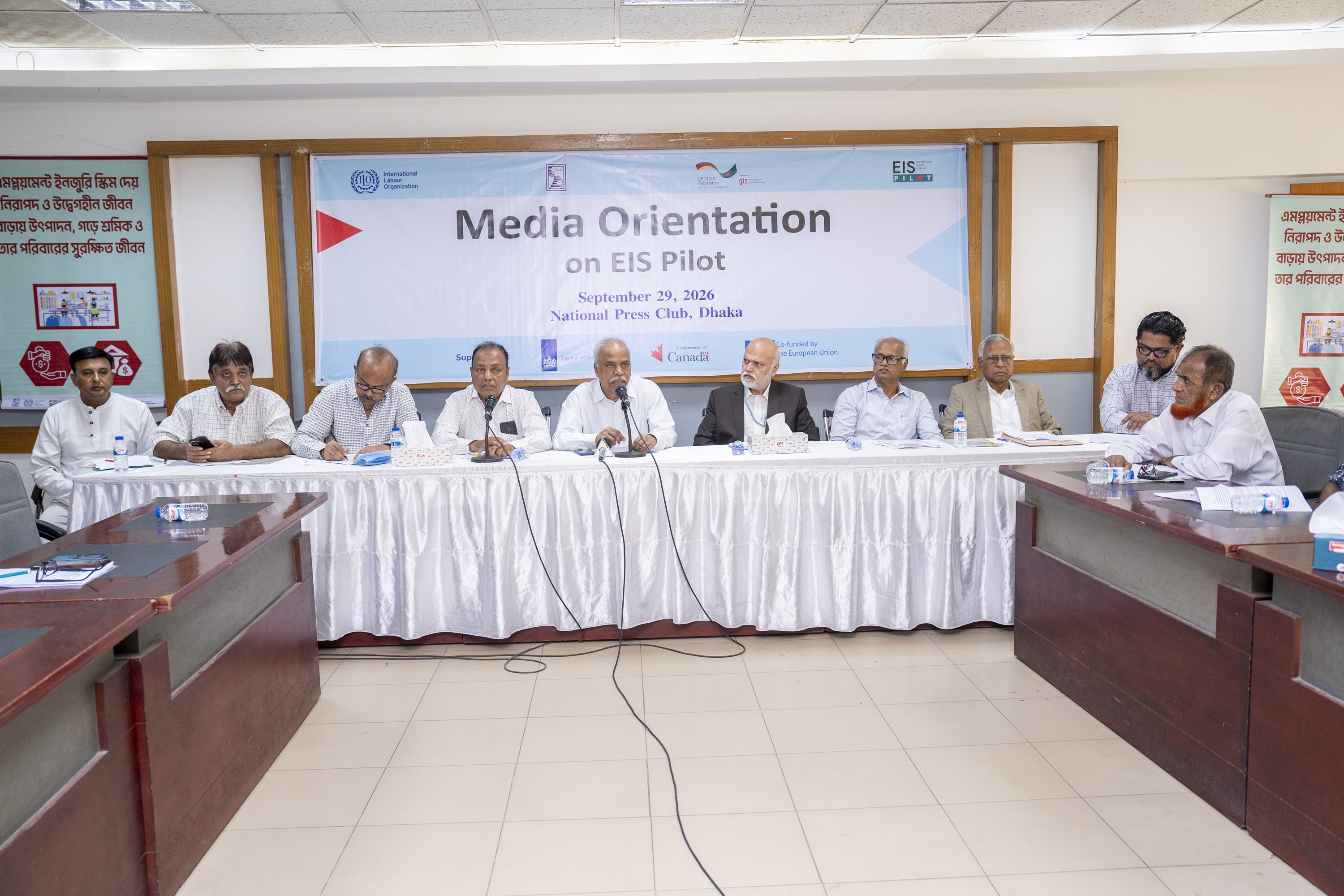 The media orientation was organized with the aim of presenting the progress of the EIS pilot project, which is being implemented with technical assistance from ILO Bangladesh and GIZ and financial support from the Netherlands, Canada and the European Union.
So far, the scheme’s pilot stage has disbursed Tk4.28 crore among the dependants of 161 deceased workers and 87 workers with permanent disabilities for 248 accidents.
Tuesday’s media orientation on the scheme was chaired by Anwar Hossain, vice-president of BILS and member of the EIS Governance Board, and moderated by Touhidur Rahman, member of the EIS Governance Board.
At the event, welcome remarks were delivered by BILS Executive Director Syed Sultan Uddin Ahmmed and EIS-ILO Chief Technical Adviser Syed Saad Hossain Gilani.
The keynote presentation was delivered by Shakil Akhter Chowdhury, joint general secretary of BILS.
Sekendar Ali Mina, member secretary of the Workers’ Safety Forum; Salauddin Swapan, general secretary of the Bangladesh Industrial Council; and Ahsan Habib Bulbul, member secretary of the National Coordination Committee for Workers’ Education (NCCWE); spoke at the event.
Representatives of national trade union federations and workers’ organizations, women and youth trade union leaders, researchers, writers, journalists, human rights defenders and representatives of civil society participated in the event.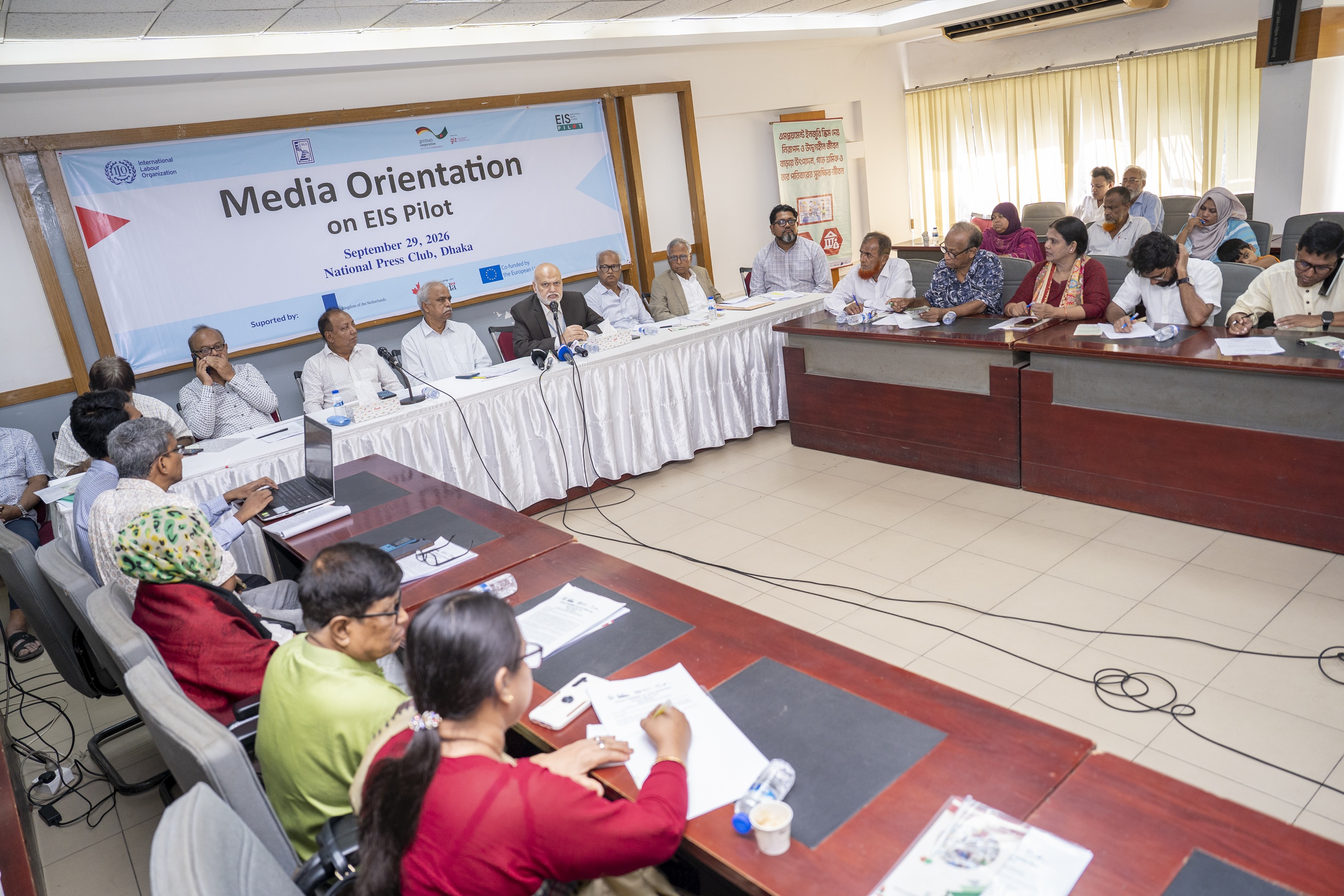
Syed Saad Hossain Gilani said that this is the first social protection project of its kind in Bangladesh. It is capable of providing three types of benefits to workers and their families. First, financial assistance, equivalent to fifty percent of wages. Second, it provides rehabilitation benefits to workers with disabilities. Third, it provides these benefits in both workplace accidents and road traffic accidents.
The keynote presentation noted that there are currently a total of 574 EIS beneficiaries.
To ensure safe, secure, dignified and fair workplaces and livelihoods for working people and their families, three main recommendations were made at this media orientation. First, implement an employment injury compensation scheme for workers in all sectors following this model. Second, include the informal sector in the employment injury scheme as part of a universal social protection programme. Third, make the employment injury scheme universal by enacting the necessary rules/laws after completion of the EIS pilot (2027).
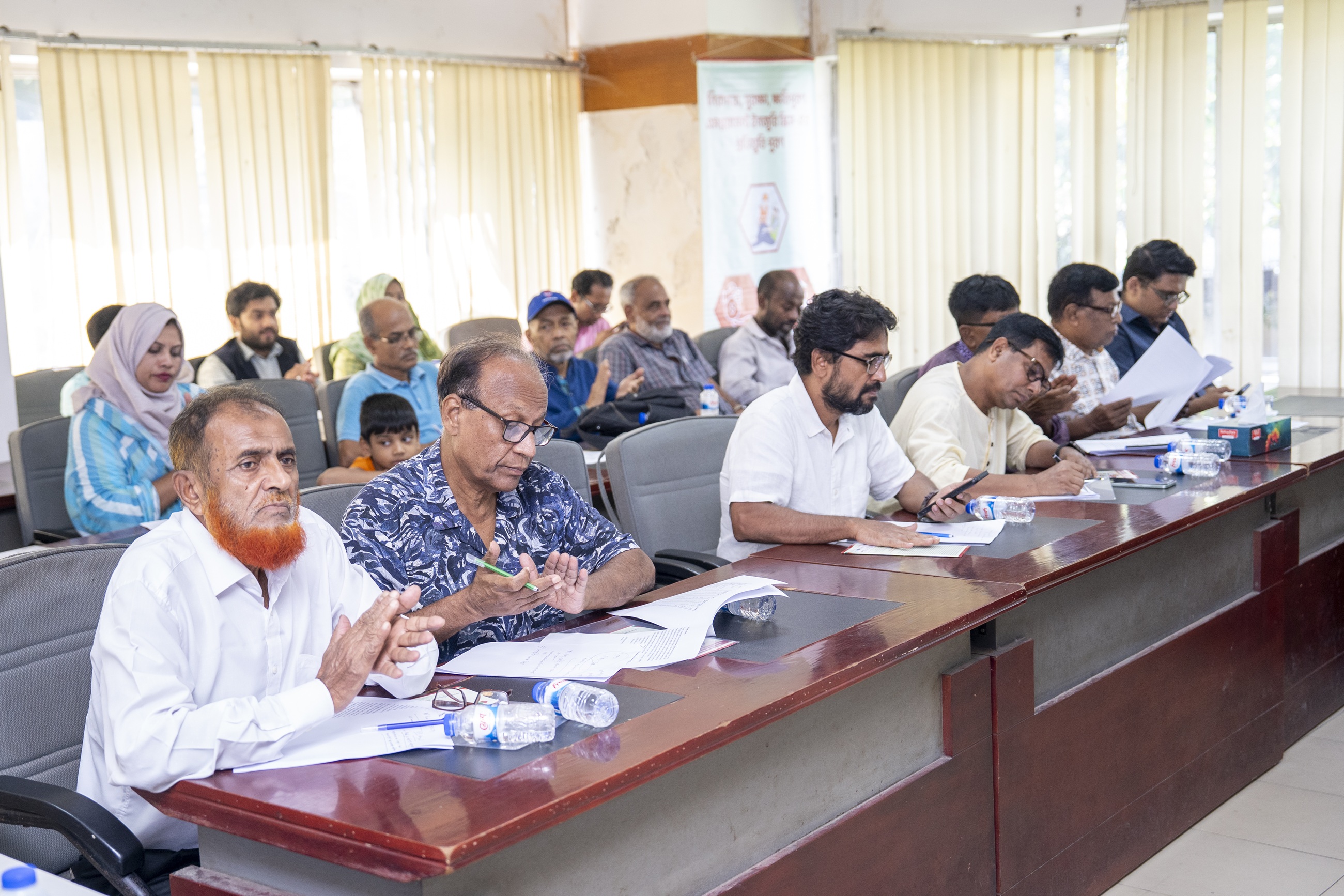 In his closing remarks, Anwar Hossain sought the cooperation of media professionals to make this project easy for the public to understand.
It may be noted that, following the Rana Plaza and Tazreen accidents, measures were taken from June 2022 to implement the Employment Injury Compensation Scheme pilot project (EIS Pilot), with the aim of ensuring social protection for workers employed in the garment sector. Under this scheme, long-term financial benefits are provided to the heirs of workers who died in workplace accidents in the garment sector or to workers with permanent disabilities.
Meanwhile, the latest 2026 amendment to the Bangladesh Labour Act has included a provision for the establishment of an EIS fund.