
B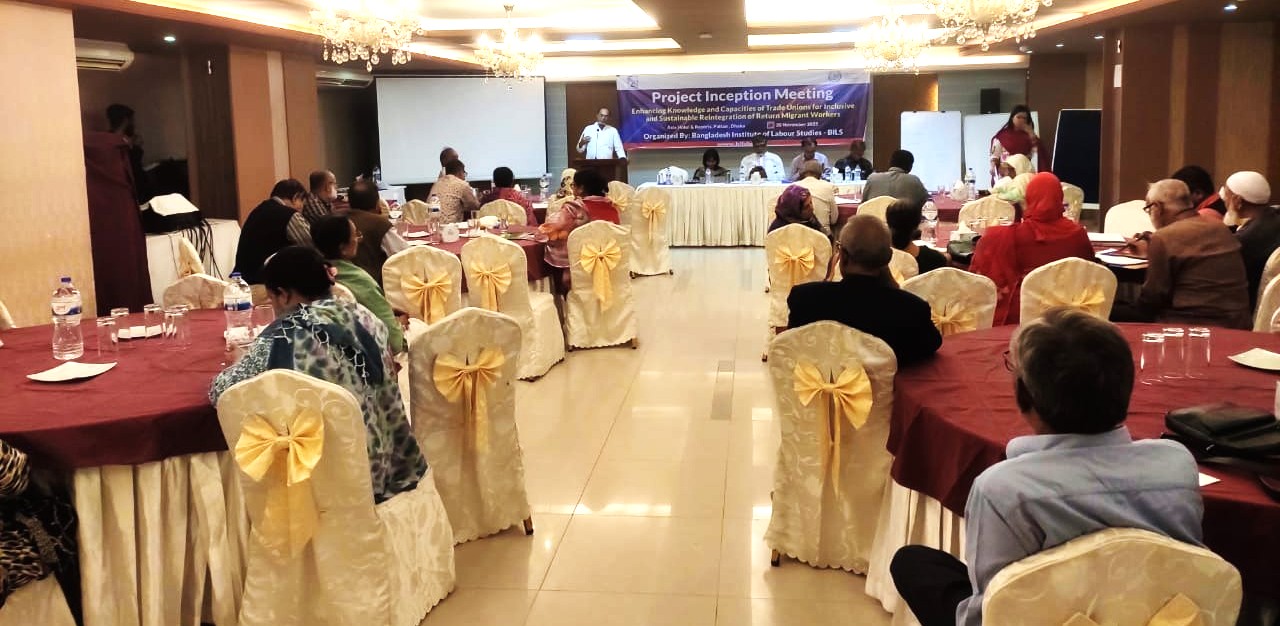 ILS with the support of ILO organised an inception meeting of the project titled “Enhancing Knowledge and Capacities of Trade Unions for Inclusive and Sustainable Reintegration of Return Migrant Workers” on 30 November 2025 at Asia Hotel & Resorts in the capital. The meeting was chaired by BILS Advisory Council Member Naimul Ahsan Jewel and moderated by BILS Executive Council Secretary Shakil Akhter Chowdhury. BILS Director Kohinoor Mahmood delivered the programme briefing, while Senior Officer Md. Osman Goni presented the project overview. The Inception Meeting was organised to share the project’s goals, planned activities, expected outcomes and way of cooperation among trade unions, NGOs, and government offices, along with collecting feedback and suggestions from the participants for smooth implementation with a view
 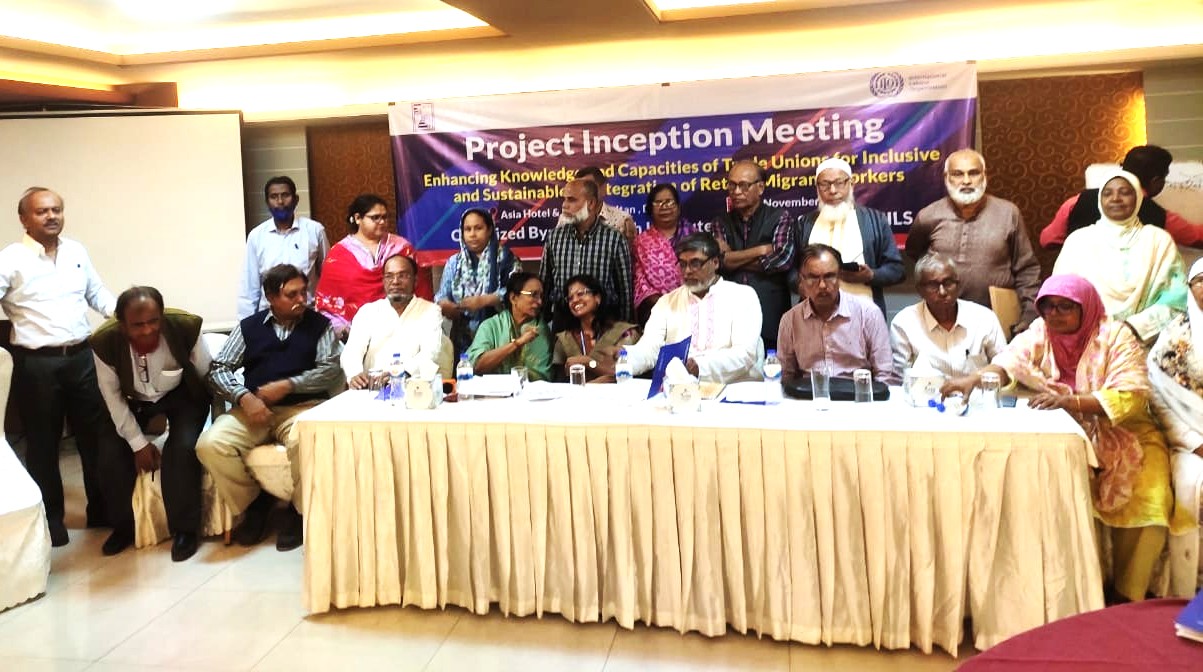 to strengthen the overall support system for returnee migrant workers. The programme highlighted the social integration of returnees and the economic contribution of migrant workers. This is to be mentioned that every year, approximately 10–12 lakh workers go abroad for sending significant foreign remittances.
ILS with the support of ILO organised an inception meeting of the project titled “Enhancing Knowledge and Capacities of Trade Unions for Inclusive and Sustainable Reintegration of Return Migrant Workers” on 30 November 2025 at Asia Hotel & Resorts in the capital. The meeting was chaired by BILS Advisory Council Member Naimul Ahsan Jewel and moderated by BILS Executive Council Secretary Shakil Akhter Chowdhury. BILS Director Kohinoor Mahmood delivered the programme briefing, while Senior Officer Md. Osman Goni presented the project overview. The Inception Meeting was organised to share the project’s goals, planned activities, expected outcomes and way of cooperation among trade unions, NGOs, and government offices, along with collecting feedback and suggestions from the participants for smooth implementation with a view to strengthen the overall support system for returnee migrant workers. The programme highlighted the social integration of returnees and the economic contribution of migrant workers. This is to be mentioned that every year, approximately 10–12 lakh workers go abroad for sending significant foreign remittances.The participants highlighted the need for stronger local-level coordination by involving banks, police, union and passport offices, along with special support for returnee migrant workers and better orientation for embassy staff. They have given emphasis on reskilling programs, easier loan access without guarantors, stopping middlemen, and financial awareness for migrant workers. Returnees often struggle for finding suitable jobs and experience with low-paid work abroad, while families frequently exhaust their earnings. Participants also called for a 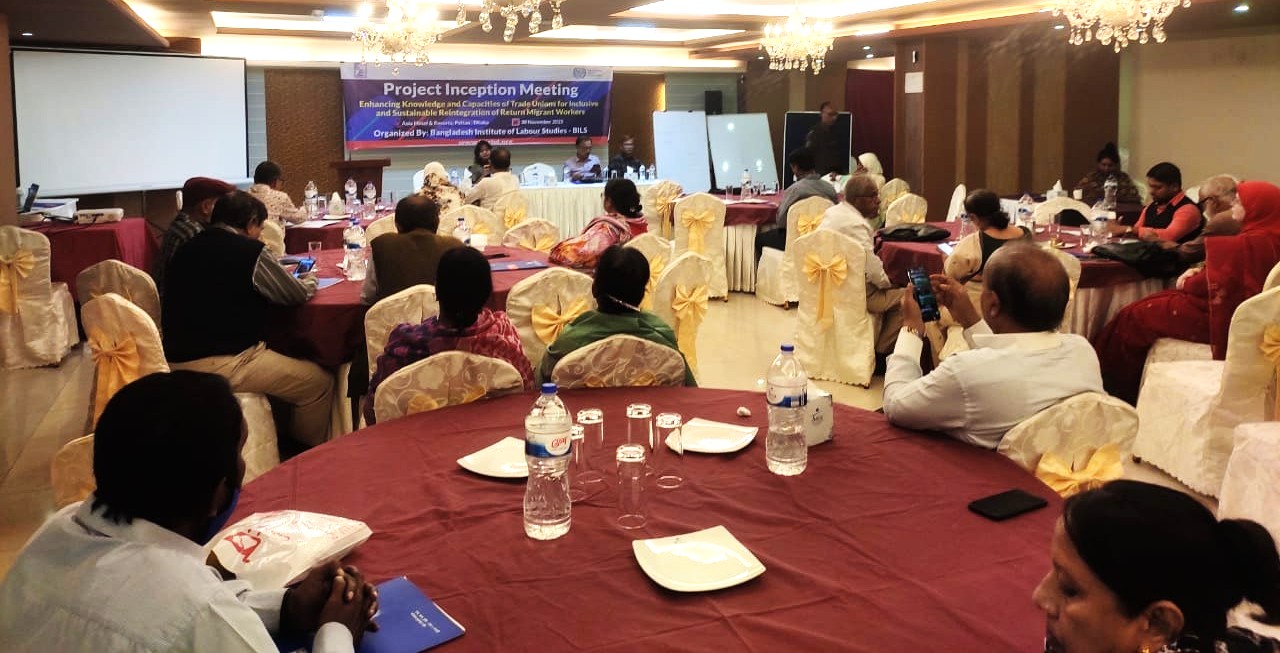 national database of migrant workers, improved skills training, financial planning guidance, and goal setting for better employment. ILO advised using more inclusive terms such as “labour power.” Several organizations—including NCCWE, BRAC, OKUP, WARBE, RMMRU, and BLAST—shared their existing support services, including legal aid, apps, helplines, and district-level assistance.
national database of migrant workers, improved skills training, financial planning guidance, and goal setting for better employment. ILO advised using more inclusive terms such as “labour power.” Several organizations—including NCCWE, BRAC, OKUP, WARBE, RMMRU, and BLAST—shared their existing support services, including legal aid, apps, helplines, and district-level assistance.The project has two main objectives: One is to strengthen the capacity of trade unions with providing reintegration services, training, and employment opportunities, and another one is to improve coordination between trade unions, government, and NGOs to ensure effective support for returnee workers. The project is expected to improve the capacity of trade unions to support reintegration, strengthen coordination among stakeholders, establish functional returnee migrant forums at the union level, and enhance economic and social outcomes for returnee workers.